
Introduction
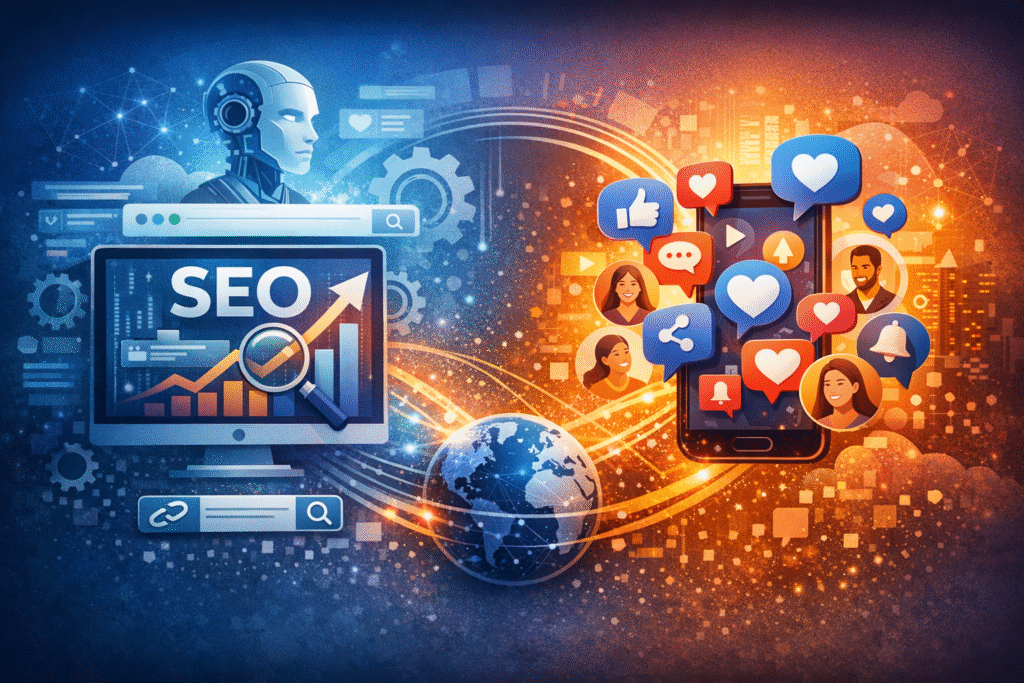
In the ever-changing world of SEO, one question refuses to die: Do social signals still impact search engine rankings? Likes, shares, comments, and brand mentions across social media once sparked massive debate in the SEO community. As we move deeper into 2026, it’s time to separate SEO myths from facts and understand how social signals truly influence search visibility today.
What Are Social Signals?
Social signals refer to engagement metrics generated on social media platforms, including:
- Likes and reactions
- Shares and reposts
- Comments and discussions
- Brand mentions
- Profile visits and link clicks
While these signals originate outside search engines, they indirectly shape how your brand is discovered and trusted online.
Do Social Signals Directly Affect SEO Rankings in 2026?
Short answer: No — not directly.
Search engines like Google have consistently stated that social signals are not a direct ranking factor. Algorithms don’t count likes or shares the same way they count backlinks or page speed.
However, dismissing social signals entirely would be a mistake.
How Social Signals Indirectly Impact SEO
Even in 2026, social media plays a powerful supporting role in SEO success.
1. Content Amplification
Social sharing increases content visibility. The more people see your content, the higher the chances of earning natural backlinks—still a major ranking factor.
2. Brand Authority & Trust (EEAT)
Active social profiles reinforce Experience, Expertise, Authoritativeness, and Trustworthiness. A brand with strong engagement signals credibility to both users and algorithms.
3. Faster Content Indexing
Highly shared content is discovered faster by search engine crawlers, helping new pages get indexed quickly.
4. Increased Branded Searches
Social exposure drives users to search for your brand name—an important signal that indicates relevance and trust.
Social Media’s Role in AI-Driven Search (2026 Perspective)
With AI-powered search results becoming more conversational and intent-driven, brand recognition matters more than ever. Social platforms influence:
- Brand mentions in AI summaries
- Authority signals for topical relevance
- User trust before click-through
Search engines are evolving from keyword matchers to brand validators—and social media plays a major role here.
Best Practices to Leverage Social Signals for SEO
Instead of chasing likes, focus on strategies that compound SEO value:
- Publish share-worthy, problem-solving content
- Maintain consistent branding across platforms
- Encourage engagement through polls, comments, and discussions
- Repurpose blog content into social posts
- Track referral traffic and branded keyword growth
Final Verdict: Do Social Signals Matter for SEO in 2026?
✔ Not a direct ranking factor
✔ A powerful indirect SEO accelerator
Social signals won’t magically push you to page one—but they fuel visibility, trust, backlinks, and brand authority, which do impact rankings. In 2026, SEO and social media are no longer separate strategies—they’re interconnected growth engines.
Conclusion
If you want sustainable SEO results in 2026, stop treating social media as “optional.” When done right, social signals amplify your SEO efforts, strengthen your digital presence, and future-proof your brand against algorithm changes.